A Five-Minute Walk-Around That Builds Better Vehicle Awareness
A low-pressure routine for noticing the exterior details that are easiest to overlook when every day feels rushed.
A five-minute walk-around is a short, repeatable habit that sharpens your awareness of a vehicle’s immediate condition without turning you into a diagnostician. The goal is simple: build a consistent visual and tactile picture of how the vehicle looks and behaves at the start of each trip. Over weeks this small routine helps you spot changes—new smells, wet spots, or handling quirks—so you can decide what to record, what to monitor, and when to contact a qualified professional.
This walk-around is meant to complement the owner’s manual and regular maintenance performed by trained technicians. It is not intended to provide repairs or definitive diagnoses. Use it to gather reliable observations (what you saw, where, when, and under what circumstances) so conversations with a shop or mobile technician are more productive. Bring the manual along the first few times to remind yourself where recommended access points and fluid checks are located.
The structure below prescribes a single path, a few focused checks, and short record prompts you can capture on paper or in a notes app. Each stop includes question-led prompts: a quick question to answer, the next step if something looks or feels off, and a clear boundary where you should stop and seek professional evaluation rather than trying to fix things yourself.
In this article
Start with the same path
Choose a starting point at one corner of the vehicle and follow the same clockwise or counterclockwise route every time. Consistency reduces the chance of forgetting a critical area such as the front corner where a small leak might appear or the rear passenger wheel where a scuff can show up after a tight turn. As you pass each area, use the same two-second pause to look for new marks, fluid on the ground, loose trim, or anything that seems out of place compared with recent visits.
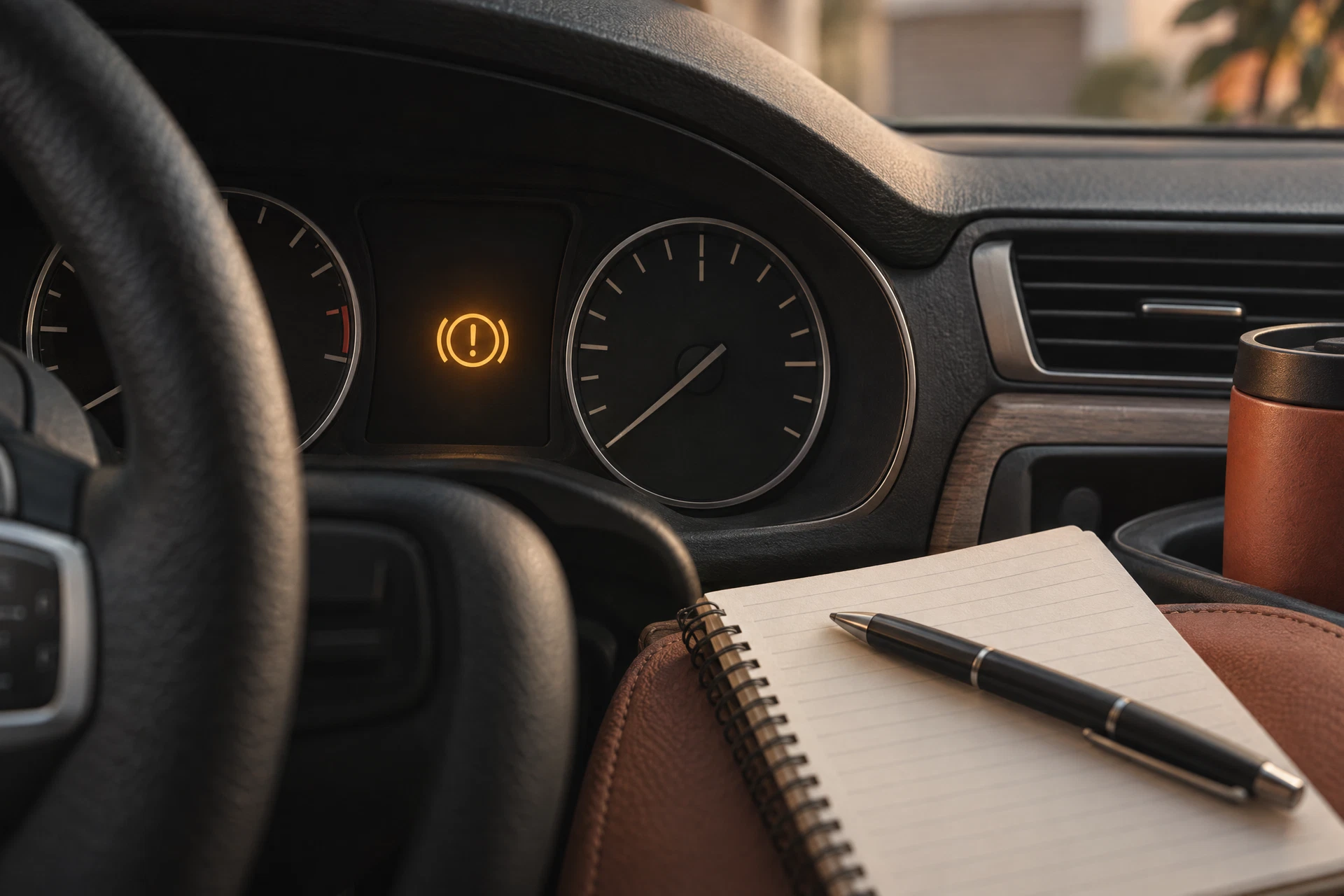
Include a quick check of the dash and instrument cluster before you lock the vehicle or before you leave the lot: are any lights on that weren’t before, is the parking brake engaged, and does any gauge show an abnormal reading? For warning-light, braking, temperature, tire, or driving-safety contexts, say that red/flashing alerts, sudden/persistent behavior changes, or uncertainty about safe travel should be evaluated promptly by a qualified professional. Record what you saw, note the odometer, and timestamp the observation so you can spot patterns later.
Let the tires set the pace
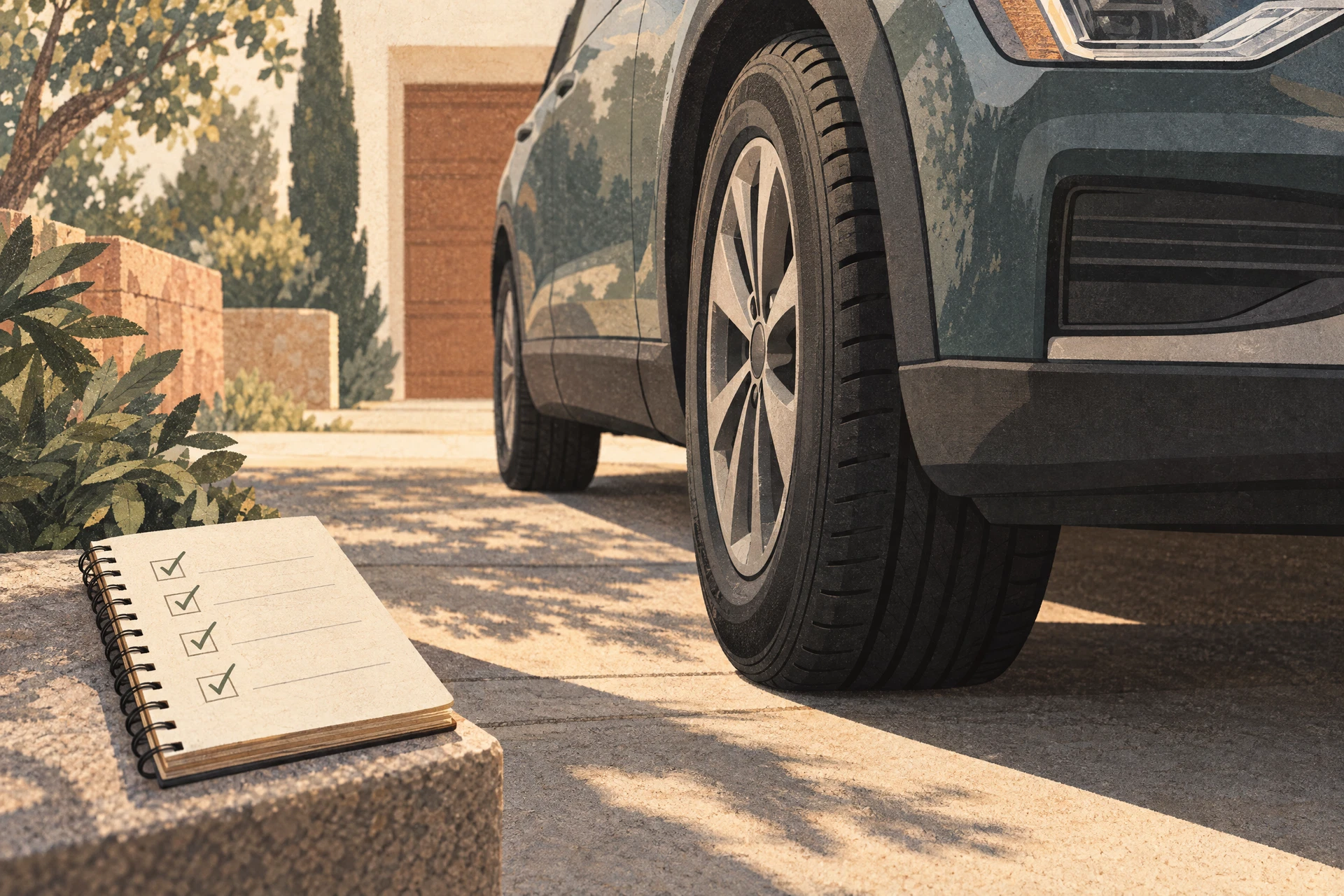
Tires tell you a lot without tools: look for punctures, sidewall cuts, uneven bulges, or obvious foreign objects embedded in the tread. Run a fingertip along the shoulder of each tire to feel for anything that doesn’t belong—rope-like threads, cracks, or sidewall bulges—and glance at the valve stem to verify it’s present and not bent. If you have a slow-leak concern, mark the tire and note how much the vehicle’s ride changes during a short drive rather than guessing pressure values; then schedule a professional check.
When you notice abnormal tread wear, a sudden flat, or a vibration while driving, stop the walk-around and consider these questions: did the condition change since your last inspection, is the vehicle pulling to one side, and are there corresponding sounds while turning or braking? For warning-light, braking, temperature, tire, or driving-safety contexts, say that red/flashing alerts, sudden/persistent behavior changes, or uncertainty about safe travel should be evaluated promptly by a qualified professional. Log your answers and, if the issue could affect stopping or control, avoid driving until it’s inspected.
Notice the windshield and cargo area
Inspect the windshield and wipers with a short visual sweep: look for new chips, spreading cracks, or wiper blades that are lifted, torn, or leaving streaks. A small chip in your direct line of sight may merit earlier attention than one in the periphery. Test operation of the wipers and washers briefly before you leave if weather is expected; if the washer soaks the glass unevenly or the motor sounds strained, note the behavior and consult the owner’s manual for washer fluid reservoir access and recommended fluids.
Open any cargo area, hitch box, or roof carrier and feel for loose straps, shifting loads, or corroded latches. Securement failures can change vehicle handling and increase the chance of debris falling onto following vehicles. Ask yourself: is everything fastened as you left it, are fasteners worn or corroded, and has the load shifted since my last trip? If you’re unsure whether a cargo restraint is safe, record the condition and seek a qualified professional or installer to assess securement methods rather than making temporary fixes on the roadside.
Close with one sentence
End the walk-around by speaking one concise sentence aloud and recording it: a short summary like, “All clear, no new leaks, tires look normal, windshield OK, ready to drive,” or, if you saw a problem, “Left rear tire slow, not safe to drive, call technician.” Stating a single sentence forces you to synthesize observations into a clear decision—go, monitor, or get help—and creates a consistent line in your log for future comparison.
Use that sentence as the title line in your notes or the subject of a message to a repair shop when you ask for advice. If symptoms are intermittent, add context: “problem occurs after long highway runs” or “noise when braking from 30–40 mph.” Those short, focused sentences make follow-up triage faster and help technicians prioritize inspections. Remember to consult the owner’s manual for vehicle-specific guidance and to contact a qualified professional whenever the condition could affect safe travel.
Keep the next step useful
A five-minute walk-around is a low-effort habit that sharpens how you notice change over time. Practice the same path, use the same prompts, keep brief records, and rely on your owner’s manual and trained professionals when something is outside your comfort zone.