Why Your Vehicle Records Matter More Than You Think
Small records make it easier to remember service history, compare changes, and bring useful context to a future conversation.
Keeping a clear, consistent vehicle record is one of the most practical ownership habits that pays off in everyday decisions. A tidy file or digital log turns vague memories into reliable facts: when the transmission fluid was checked, who inspected the brakes last, what noise started at a specific mileage. That clarity helps you prioritize work, compare quotes, and decide whether an issue is new, recurring, or part of long-term wear — without guessing or relying on incomplete recollections.
Records do more than help with repairs; they shape conversations. When you can show a technician the exact date and mileage when a symptom first appeared, the shop spends less time repeating checks already done and more time narrowing the cause. When you can point to several entries that show the same minor symptom over months, you can move from anecdote to pattern and ask targeted questions about long-term implications or alternative fixes.
A vehicle history also protects your time and money during transitions. If you sell, trade in, or pass the vehicle to another driver, a well-organized record reassures buyers and helps prevent disputes about maintenance responsibility. Records don’t eliminate the need for skilled inspection, but they give you evidence to base next steps on and make your conversations with professionals more efficient and focused.
In this article
Make one home for the record
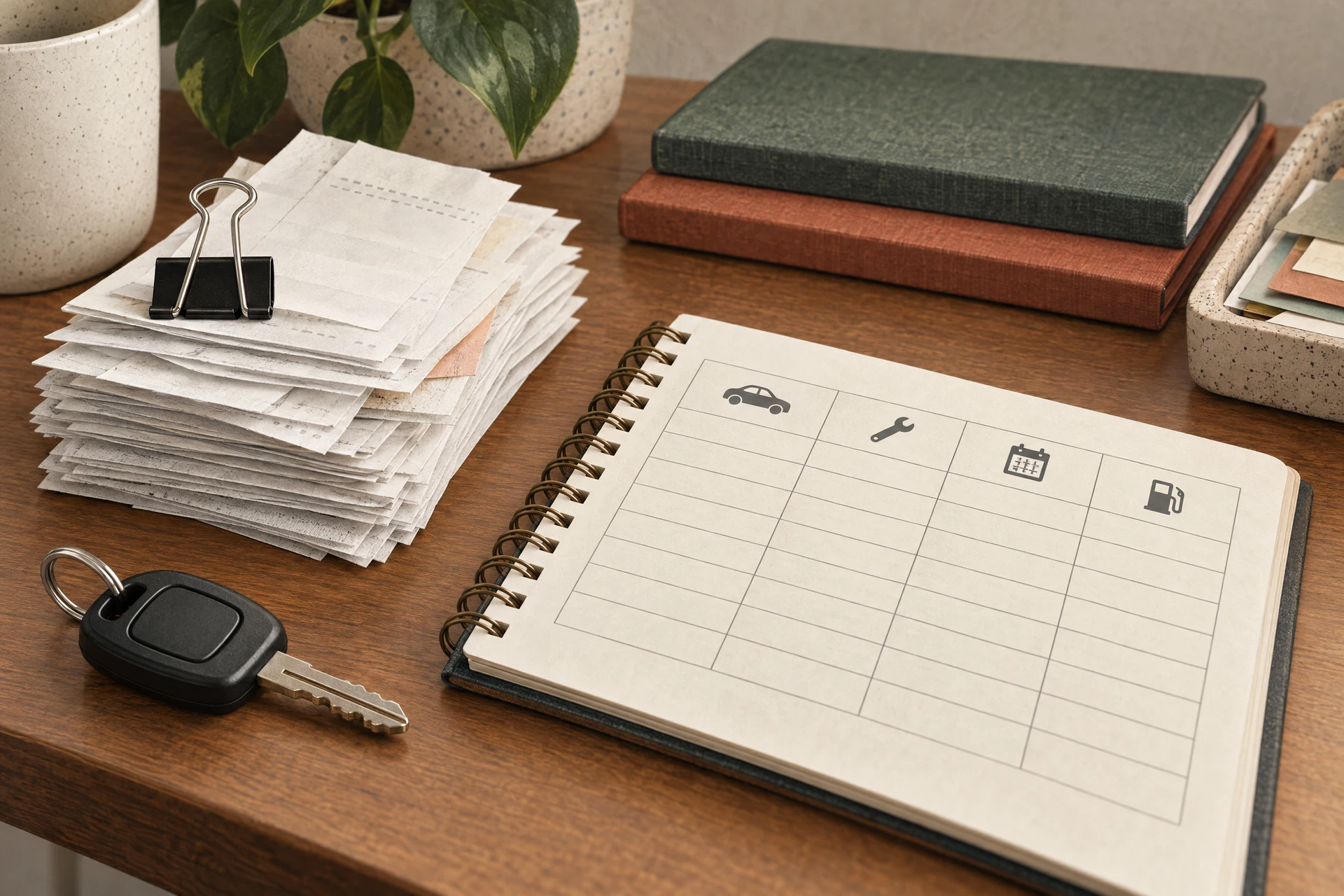
Choose a single place to keep all service and observation entries so information doesn’t fragment across receipts, emails, and mental notes. That one home can be a paper binder with labeled sleeves and a simple index, a dedicated notebook kept in the glovebox or console, or a smartphone app that lets you attach photos and scans. The important part is consistency: the next time you need to check when a filter was changed or which shop performed a repair, you should know exactly where to look.
Decide what categories belong in that home and stick to them: date, mileage, odometer reading at service, shop name and contact, service performed, parts used or part numbers, costs, and any recommended follow-up. Add a short observation line for the driver’s perspective — how the car sounded, what dashboard indicators were active, or whether the problem appeared after a particular event. Over time these repeated fields make entries comparable and the record more useful for decision-making.
Write the observation beside the service
When you get work done, don’t just keep the receipt—write, in plain language, what you noticed beside the corresponding entry. For example: “started clunking when turning right at 24,300 miles; noise louder after hitting pothole” or “intermittent low-power mode while accelerating, noticed three times over two weeks.” Those short owner observations provide context a technician won’t get from a diagnostic code alone. Make them specific: include where the vehicle was, what you were doing, and whether the symptom was repeatable.
Also note what the shop reported on the same line: if they test-drove the car, what they saw; if they found a loose clamp, how they corrected it; and whether they suggested monitoring a part. These paired notes — owner observation beside shop finding — create a direct record you can review later when deciding whether a “fix” actually addressed the symptom or whether additional work is needed. If a warning light, braking issue, temperature change, tire concern, or anything affecting safe travel appears, remember: Red/flashing alerts, sudden/persistent behavior changes, or uncertainty about safe travel should be evaluated promptly by a qualified professional. Do not drive through a concerning symptom.
Keep the receipt readable
Receipts lose value if you can’t read them later. Scan or photograph paper receipts immediately and store the image in your record home with the same entry fields—date, mileage, and what was performed—so the receipt becomes part of the narrative instead of a separate, fading artifact. If a receipt is handwritten and unclear, add a typed summary of the key points beneath the image: which parts were replaced, serial numbers if visible, and any warranty or return conditions mentioned.
When you file a digital copy, include a note about the person or shop who issued the receipt and any verbal estimates that influenced your decision. If a shop promises a warranty period or follow-up inspection, write that promise into the entry and set a calendar reminder for the end of the period so you can verify the condition while the commitment is still current. These practices keep financial and service history linked and make future comparisons reliable.
Use the record to ask better questions
A good record changes the quality of your questions to professionals. Instead of asking “what’s wrong?” you can ask: “At my 48,200-mile service on June 12 you noted a slight oil seep at the front cover; is that likely related to the rough idle I’m now hearing?” Or: “I have three entries showing progressive tread wear on the left front—do you recommend alignment or a specific inspection to pinpoint the cause?” These focused questions save time and direct the technician to the most relevant checks.
Records also help you evaluate advice. If a shop recommends replacing an expensive component, consult the record first: has this part failed before, were there prior symptoms, and was a less invasive repair tried? Ask to see the technician’s test notes and compare them with past entries. When you don’t understand a recommended action, bring up the history and request clarification: what evidence links the current symptom to the proposed repair, what alternative steps exist, and what to watch for next. Use the record to turn conjecture into a decision tree rather than a single impulse purchase.
Keep the next step useful
Vehicle records are a practical habit that pay back through clearer choices, sharper conversations with technicians, and smoother transitions between owners. Use your owner’s manual for vehicle-specific guidance and bring records to every visit so professionals can work from facts rather than memory; if something feels unsafe or unclear, seek a qualified professional for an in-person evaluation rather than trying to diagnose from records alone.