How to Prepare for a First-Time Repair-Shop Visit
What to bring, what to note, and how to frame questions when you are meeting a repair shop for the first time.
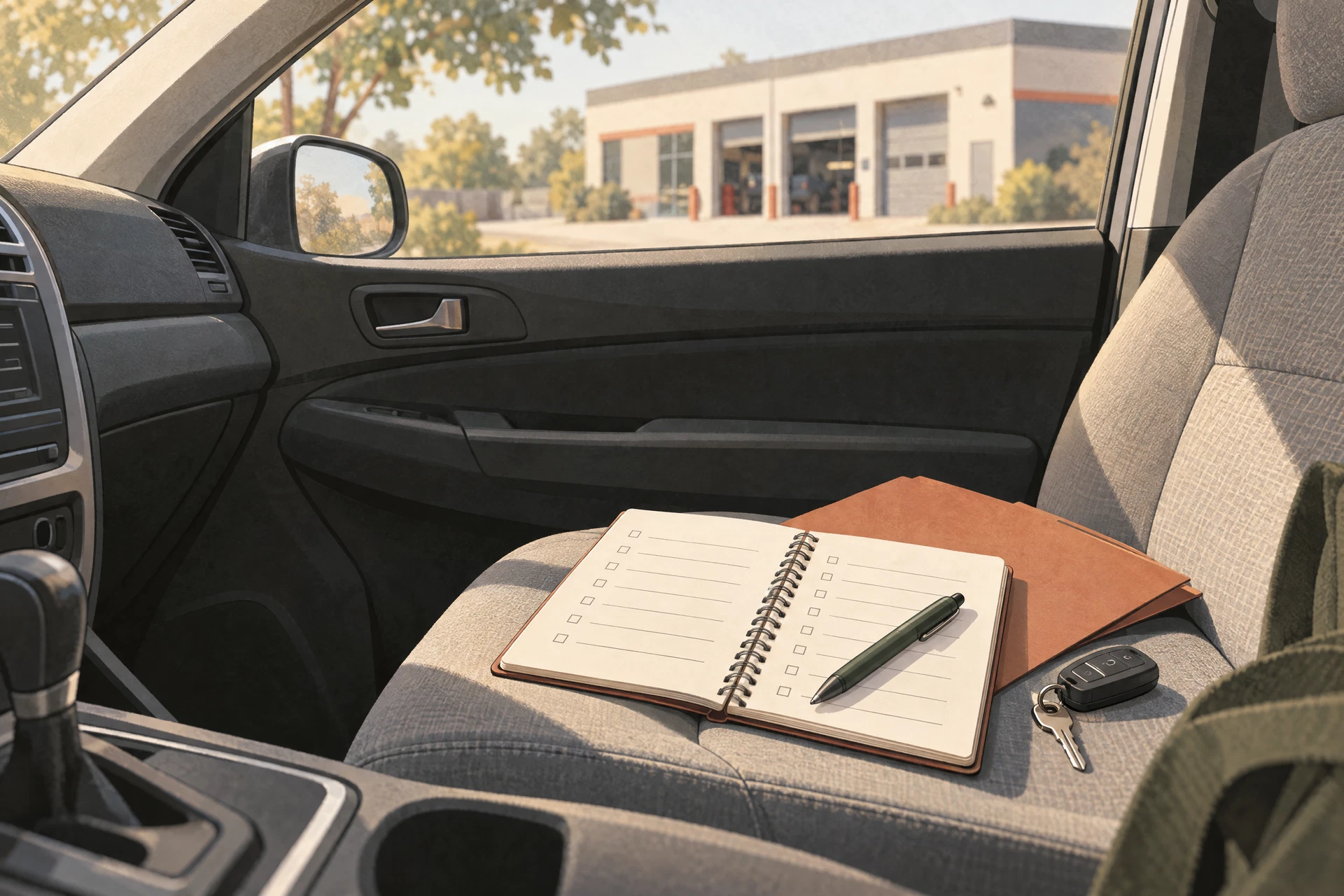
A first visit to a repair shop can feel unfamiliar, but a little preparation makes the meeting more productive and less stressful. Think of the appointment as a short investigative interview: you provide the facts about what you’ve been observing, the shop uses tools and expertise to collect data, and together you decide the next steps. Bringing clear, dated notes and a few supporting items helps keep the conversation focused and reduces back-and-forth.
This article lays out a practical sequence: tell the story in order, gather recent context to support that story, set the questions you want answered up front, and leave the shop with a usable note you can rely on going forward. Each step uses simple record prompts and question-led choices so you can be precise without pretending to diagnose. Use your owner’s manual for vehicle-specific items and plan to consult a qualified professional if anything about the vehicle’s condition concerns you.
Before you drive to the shop, assemble a small packet — digital or paper — that contains key details and a short symptom timeline. The goal is not to explain how to repair the vehicle but to make it easy for the technician to reproduce and test the issue, and for you to make informed decisions about authorizations and follow-up.
In this article
Write the story in order
Start with a concise chronological description of the symptom. Use date-and-time stamps: when the issue first appeared, what you were doing (cold start, highway, idling at a light), and how often it happens. Record simple, observable facts: sounds you hear, dashboard lights that appeared, changes in how the vehicle moves, and whether anything made the symptom better or worse. Short bullet lines work better than long paragraphs when you hand them over at check-in.
Include the context of the events that preceded the problem: recent long trips, fuel fill-ups, unusual road conditions, or after a weather event. If you have audio or video of the symptom, label the file with date, mileage, and a one-line description before you hand it to the shop. Red or flashing alerts, sudden or persistent behavior changes, or uncertainty about safe travel should be evaluated promptly by a qualified professional.
Gather recent context
Compile a short, factual list of recent maintenance and use items: current odometer reading, last time fluids or consumables were checked per your owner’s manual, any recent repairs, and whether you have the original service receipts. Don’t guess — write exact numbers and dates if you know them. If you don’t, note what you don’t know and whether the vehicle has been driven since the symptom started.
Add environmental details that could influence a diagnosis: temperature extremes, heavy stop-and-go versus steady highway driving, whether the vehicle sits outdoors, and if you recently used an unfamiliar fuel source. If you’ve made temporary adjustments (tire pressure changes, removing a roof rack, using a different fuel), note those decisions and the date you made them. This context helps the shop avoid redundant checks and lets you ask focused follow-ups.
Set your questions up front
When you check in, tell the service advisor which specific questions you want answered. Useful examples: what tests will they perform to reproduce the symptom, whether the repair requires parts that must be ordered, and whether they will call before proceeding with additional work. Phrase one question about scope: do you want them to proceed with commonly expected repairs up to a set dollar amount, or do you want a call for every proposed step? Clear authorization preferences prevent unwanted surprises.
Ask how the shop documents findings and communicates updates: will they text photos of diagnostic trouble codes or parts before installation, and who will be your point of contact during the repair? If towing or leaving the vehicle overnight is required, ask about vehicle security and storage procedures. If the symptom involved warning lights, braking, a temperature spike, tire concern, or anything that affects how the vehicle drives, remember that red or flashing alerts, sudden or persistent behavior changes, or uncertainty about safe travel should be evaluated promptly by a qualified professional.
Leave with a usable note
Before you leave the shop, ask for a short, written intake note that you understand and can use later. It should include a brief symptom summary in your words, the tests the technician plans to run, an estimated timeline, and who will call you with results. If the shop uses internal codes or shorthand, ask for plain-language descriptions you can keep. A clear intake note avoids misremembering what was agreed to and gives you a foundation for any follow-up conversation.
If the shop produces an estimate, request it in writing and ask what would change that estimate — for example, hidden corrosion or additional parts discovered during disassembly. Ask whether replaced parts can be returned to you or photographed, and whether any repairs carry a stated parts-or-labor coverage period. Note any next-step approval thresholds (e.g., call me for anything above a set amount) and record the name and direct contact for the person who will update you.
Keep the next step useful
Preparing this information before a first repair-shop visit makes the process clearer and reduces follow-up friction. Keep the owner’s manual handy for vehicle-specific checks and rely on a qualified professional for diagnosis and actions that affect safe operation. If anything feels urgent or uncertain, ask the shop to evaluate the condition promptly rather than guessing about continued driving.