A Simple Way to Plan for Tire Replacement
A practical framework for observing tire condition, saving records, and planning questions before the decision feels urgent.
Tires are a recurring ownership cost most drivers expect but few plan for deliberately. Instead of waiting for a flat or a last-minute trip to the shop, a short season-by-season routine and a modest financial buffer make replacement less disruptive. This article focuses on simple, practical steps you can take today to recognize when tires are approaching replacement, set aside funds ahead of time, and record the details that matter later.
Planning for tire replacement starts with observation and ends with clear records. Many people notice a problem only when it becomes urgent; the approach here is to build a small habit of looking over the whole tire, asking the right questions before you decide, and holding a compact file of receipts and photos. Those steps help you make smarter choices about replacing one, two, or all four tires without guessing.
You won’t find firm timelines or pressure numbers here—those belong in your owner’s manual and in a conversation with a service professional who knows your vehicle and local conditions. Instead you’ll get targeted prompts you can use to inspect tires, to budget, and to guide a shop visit so decisions are clearer and less stressful.
In this article
Observe the full tire, not just one spot
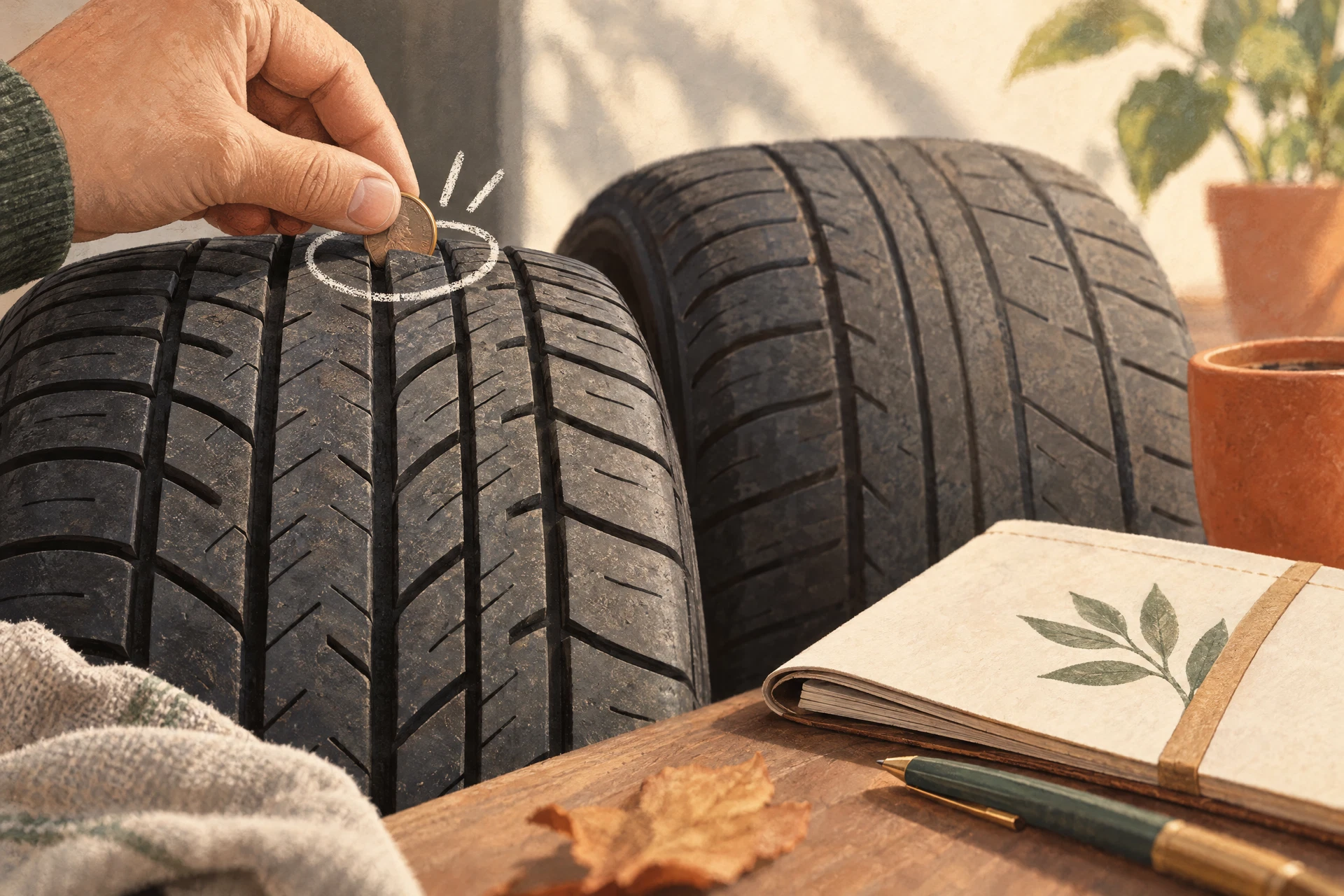
When you look at a tire, take a quick circuit around the entire surface: the outer tread, inner shoulder, and sidewall. Wear can show in different places depending on alignment, inflation history, or suspension behavior, and a single spot of damage doesn’t tell the whole story. Use daylight or a flashlight and compare tires on the same axle; uneven patterns between left and right are meaningful information to note before you call a shop.
Make simple records during that inspection: photograph the whole tire from a few angles, write the date and the vehicle odometer reading, and make a short note about where the wear is concentrated. If you see a symptom that changes suddenly, persists, or makes you unsure whether it is safe to drive, have it evaluated promptly by a qualified professional. Do not drive through a concerning symptom. Also consult your owner’s manual for any model-specific checks or warnings to follow.
Make space for the future expense
Tire replacement can arrive at an inconvenient time unless you plan. Rather than guessing a number, create a small, dedicated line in your routine spending or savings plan for tires so you're not surprised when replacement is due. Think in practical terms: how frequently you drive, the typical road surfaces you encounter, and whether you use the vehicle for hauling or frequent highway travel. Those habits will influence how quickly tires near replacement and therefore how much you should set aside.
Keep a short purchase record each time you buy or install tires: the date, the shop or seller, brief description of the tire type you chose, and a copy or photo of the receipt. That record helps you see patterns—how long a particular tire lasted on your vehicle under your driving conditions—and makes it easier to estimate the timing and likely cost of the next replacement without having to remember past details from memory.
Bring questions before the decision
Make a checklist of questions to take with you to a tire shop or when you call for advice. Useful questions include: is the observed wear pattern likely due to alignment or driving habit; would replacing two tires instead of four be appropriate for my vehicle and driving conditions; and are there recommended tire types for my usual weather and road surfaces? Framing the visit around questions helps you compare answers from different shops and prevents impulse choices.
When the shop gives recommendations, ask them to explain the evidence: which tires showed the wear, what measurements they used, and whether other components like alignment or suspension were inspected. If you get any red or flashing alerts from the vehicle, or notice sudden or persistent changes in braking, steering feel, or ride quality, have those evaluated promptly by a qualified professional. Do not drive through a concerning symptom. Bringing clear questions will also help you decide if a follow-up inspection is warranted before replacement.
Keep the replacement record
A compact, organized replacement record is valuable for budgeting, for future decision-making, and for resale documentation. For each tire event, record the purchase date, odometer, tire description (as printed on the sidewall), where they were bought, who installed them, and whether any warranties or road hazard options were included. Add a photo of the tire label and the invoice so you can answer later questions without digging through boxes.
Store this material in a single place: a labeled folder in a glove box for short-term use and a digital copy in a cloud folder for long-term access. Include notes about where each tire was mounted—front or rear—and any rotation history you know. Over time those entries show how your tires performed under your actual use, helping you make a more confident plan when replacement time comes again. For vehicle-specific limits or replacement recommendations, follow the owner’s manual and consult a qualified technician.
Keep the next step useful
Planning for tire replacement is about turning a surprise cost into a predictable part of ownership: observe the full tire regularly, save a small amount toward replacement, bring clear questions to a shop visit, and keep concise records. Use the owner’s manual for vehicle-specific guidance and consult a qualified professional whenever a symptom or alert raises concern.